The real blackout in AI video is trust
Last updated: March 20, 2026
You lock a cut you’re proud of. It’s ready to leave your hands and meet the world.
Then the certainty goes. Once the work leaves your timeline, you can’t rely on people believing what they see, or believing it in the way you intended. This is what happens when confidence starts to falter.
Is this real, or did somebody just splice in a lie?
This is the first blackout.
The real blackout is quieter. You’re travelling, scrolling your phone, and your face appears in an advert you never agreed to. Same voice. Same smile. No consent. No warning.
How do you pull it back?
You can’t, not cleanly. Once a clip spreads, it gets copied, re-cut, reposted, and stripped of context. Control tends to shrink the further the file travels.
Or think about the animator who spent months drawing every frame by hand. It goes online, and the first comment says, “Another AI fake.”
They don’t see the sweat. They don’t care about the craft. To them, it’s just “generated” and your real work gets erased.
Maybe you’ve felt it too with endless AI clips, all claiming to be true. Makes you wonder if trust is even possible.
That’s the real blackout in AI video. Not power cuts. Confidence cuts.
The moon landing problem
Convincing fakes don’t only create new lies. They can also make real footage easier to dismiss.
UNESCO captures this drift in Deepfakes and the crisis of knowing, including the liar’s dividend, where authentic recordings can be brushed off as probable fakes.
That shift has a creative cost, but it can spill into bigger things too. Imagine a major scientific announcement that relies on shared confidence. A moon landing style moment, a mission update, a first look at something that needs public belief to matter. One believable fake circulating early, and a chunk of the audience may default to probably generated without even trying to verify it.
Humans are already pushing towards Moon and Mars ambitions, and those plans depend on credibility and sustained support. Reuters reported comments about SpaceX prioritising a lunar self-growing city, which is exactly the kind of long-horizon narrative that can weaken if confidence fragments.
Put simply, when trust in visuals erodes, the collective will and investment needed for monumental achievements like returning to the Moon or beyond can start to erode too.
The same tools building tomorrow could burn down the trust we need to get there.
If you want a quick self-check before you publish, these two questions usually expose where the risk sits.
Would it still make sense if someone removed the caption and reposted it elsewhere?
If a viewer is sceptical, can you show a calm proof trail without arguing?
This is the context tax of synthetic media. The more viewers assume clips can be manufactured, the more work every honest clip has to do just to be believed.
A lot of this ties back to the wider question of AI filmmaking and trust, because when the earliest known history of something is questioned, even honest craft can be read as manipulation.
The flood shifts value, and ethics becomes part of craft
When output becomes abundant, novelty tends to stop paying. Judgement starts paying, and ethics becomes part of that judgement.
The uncomfortable question is simple. If the inputs are borrowed without permission, what are you actually building on?
Treat inputs as a promise, not a convenience. It keeps your work steadier when it travels beyond your control.
A casual disregard for IP doesn’t just create drama, it changes who gets to keep going. When someone lifts your work or trains on it without permission, they’re not only borrowing a look, they’re borrowing time. The original creator has already paid the cost in endless nights, revisions, and judgement, and the reward that should follow can get diluted before it arrives. If that labour becomes “just training data”, the loss isn’t only moral, it’s practical, because fewer people can afford to spend years getting good at the hard parts.
People love the line “one person did this in a day, imagine what a team could do with a modest budget”. It’s worth remembering what sits under that sentence. None of it exists without the grit of the creatives who made the original work worth copying. Under each prompt typed in lies borrowed time.
At the same time, the technology can help immensely when it’s used with permission and intent. It can compress the dull parts of the job, speed up iteration, and let more of the budget go into story, performance, and the details that audiences actually feel.
Use AI when the source material is yours, commissioned, or properly licensed
Treat faces and voices as consent-first, not disclosure-first
Assume “it was online” is not the same as permission
If you can’t show where it came from, treat it as unsafe to build on
In practice, this is where projects either stay calm or become stressful, because the difference is rarely the output, it’s the paperwork you can produce quickly. The habits behind who owns the IP and how do you prove you made it make that easier, because they turn ethics into files, permissions, and version proof you can actually show.
The Trust Pack that survives reposting
It’s tempting to want a single fix. Watermark it. Detect it. Label it. Done. That instinct is already showing up more widely, with growing attempts to establish recognisable AI-free labels for human-made work. In practice, though, proof holds up better as layers, because each layer fails differently.
In practice, proof holds up better as layers, because each layer fails differently. Metadata can be stripped. Signals can degrade under compression. Matching can throw up edge cases. What lasts is the combination of technical signals plus a record you can actually produce. Provenance is a declared history you can check, not a guarantee that a clip is true.
C2PA explains this approach in the C2PA and Content Credentials explainer, which is useful because it frames provenance as an origin record rather than a promise that a clip is true.
A quick map helps you choose layers without over-claiming what they can do.
| Layer | What it helps with | Where it falls short | How future tech could assist |
|---|---|---|---|
| Forensic watermarking | Tracing leaks back to a delivery point or session | It won’t stop phone recordings | Tighter playback and screening controls, plus faster reporting and response workflows once a leak is identified |
| Provenance records | Showing an origin trail when supported | It can be stripped in reposting | More robust provenance handling through common exports, plus wider platform support for verification and display |
| Similarity matching | Finding copies and near-copies at scale | Disputes and false matches can happen | Better lineage mapping that clusters derived versions and adds review signals for edge cases |
| Human documentation | Explaining decisions, intent, permissions | Only works if it’s organised | Automated logs inside tools and editors, plus signing and time-stamping built into export and delivery |
A Trust Pack is the minimum evidence you keep on file so you can respond calmly when context disappears. Keep it small enough that you’ll actually maintain it.
The approved master export that was signed off
Two or three key source files that materially shaped the piece
One dated note on what was generated and what was edited
Releases, licences, or permissions for anything identifiable or protected
A record of first delivery or first publish, plus the version name
One extra habit makes the Trust Pack more reliable. After upload, download the version the platform serves back and keep that alongside the master. If anything strips provenance data or changes what survives compression, you’ll know early, not during a dispute.
Here’s what that can look like in practice. Say a brand edit uses a real spokesperson and AI has been used for clean-up, localisation, or alternate cutdowns. The Trust Pack would include the master, the consent and usage scope, the version log, and the exact export that was approved for release. If the clip gets re-captioned or re-cut, there’s a clean record to point to.
When leaks and catalogues scale, trust gets expensive
People often talk about leaks, deepfakes, and catalogue scraping as separate problems. In practice they land on the audience as one experience. Confidence drops, verification effort rises, and trust becomes something viewers ration. In film culture, that pressure is easier to see in public because questions around AI-generated faces and trust in Hollywood bring consent, authorship, and audience confidence into the same conversation.
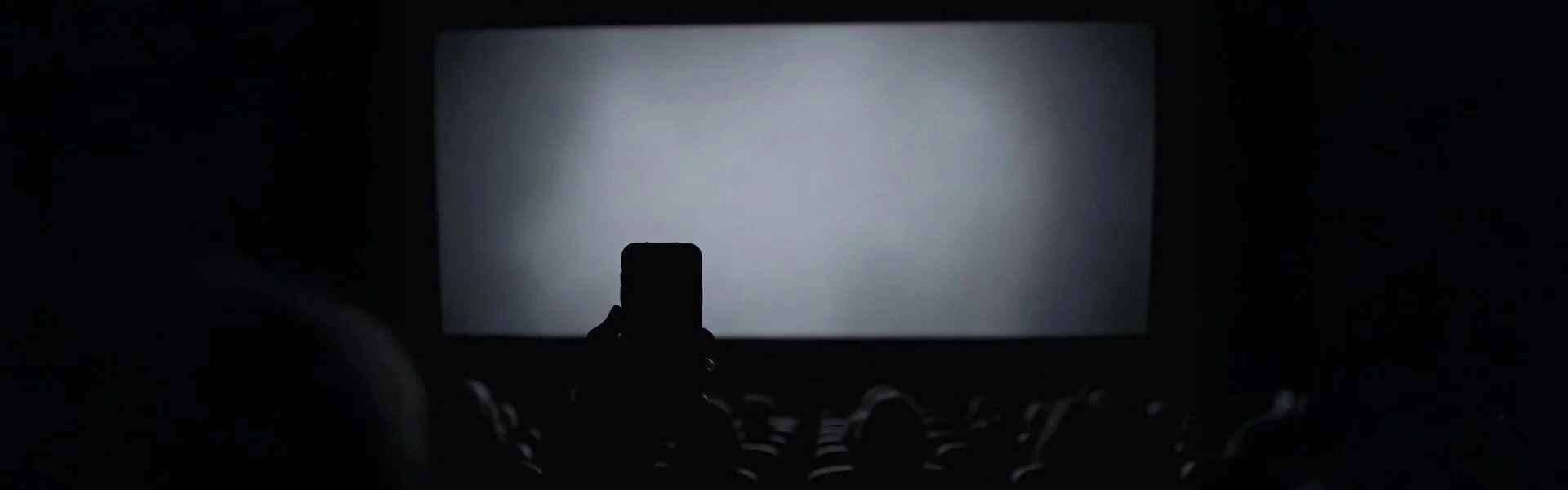
A big film releases. Someone records it on their phone in a cinema. Within days, clips circulate with re-captioned intent and stitched endings. Some of that will be mischief. Some will be marketing bait. Some will be people chasing attention. The point is what happens when altered clips travel faster than context. When that happens, the public understanding of the film can bend. In some cases it can create reputational friction and reduce urgency to buy a ticket, because the story feels spoiled, distorted, or already consumed in fragments.
Now scale the same break down to creators. A YouTuber’s catalogue can be downloaded, indexed, and reused as a template library. The damage isn’t only reuploads. It can turn into near-copies at volume, same beats and structure with just enough change to feel plausible, which splits attention and pushes the original creator into proving authorship instead of making work.
For a famous podcaster, it can go beyond clips. A full episode script can be cloned, then re-recorded with a different voice and delivered through new avatar faces that look convincingly human. The point is not whether everyone falls for it, it’s that enough people might, and the correction often arrives after the narrative has already landed.
Platforms already run matching systems, so enforcement often looks like matching plus friction, and YouTube’s How Content ID works page describes how uploads are checked against reference files provided by rights holders.
Where AI actually earns its place
Nobody knows exactly where enforcement and standards will land. That’s why the safest move is to design for clarity, consent, and a trail you can defend. The goal isn’t perfect certainty, it’s staying calm when context disappears.
A 2026 iProov survey found nearly half of people now question almost everything they see online because of deepfakes. They called it a Great Trust Recession. That shows how fast confidence can erode when fakes become too easy. That’s why the safest move is to design for clarity, consent, and a trail you can defend.
This is hypothetical, but it points to a more constructive direction. If the source material is authorised, AI could use a creator’s original context to build a controllable 3D scene, not just generate a flat clip. Instead of hoping a prompt lands, you could move objects with precise spatial control, refine motion beat by beat, and make changes that feel closer to VFX work than roulette. It also averts endless prompting, because you’re not begging for variations, you’re steering.
Suddenly total creative control sits back in the hands of the human operator, and that muscle of flexibility could make the editor’s job more powerful, not less. Interfaces may shift too. A headset or spatial rig could slow the work down in a good way, making micro-adjustments deliberate and embodied, more like operating a physical set than chasing infinite variations.
A Trust Pack isn’t magic. It’s just a flashlight in the dark.
What You Can Actually Do About It
Confidence doesn’t usually vanish in one big crash. It slips away quietly, bit by bit, until even the real stuff starts looking suspicious.
Here’s the practical stuff that actually helps when trust starts to fade:
Keep a small Trust Pack for anything where consent or origin could matter
Treat every input as a promise — assume you’ll need to prove where it came from
Double-check what survives upload — always save the version the platform actually serves back
Expect enforcement to rely on matching and friction, not magic detection
Use AI freely, but tie serious work to source material you can prove and consent you can show