Ethical AI in Video: Guidelines for Avoiding Bias and Deepfake Misuse in Business Content
Updated January 2026

As a London-based filmmaker with over 15 years behind the camera, I’ve watched technology reshape video production in remarkable ways. Tools that once demanded days of work can now finish in moments, and artificial intelligence drives much of that change. With UK discussions around AI rules and wider frameworks like the EU AI Act shaping the landscape, excitement often comes hand in hand with caution.
In business video, where trust forms the foundation, misusing AI can harm reputations fast. I’ve always championed human-made films built on real people, real lenses, and real light. That approach feels more vital than ever. AI brings powerful possibilities, but it also introduces risks such as hidden bias and deepfake misuse. This post offers practical guidelines to help businesses use AI in video responsibly while preserving authenticity and audience confidence.
Clear guardrails matter most once viewers start watching with suspicion. Credibility is built through consistent choices, which is why trust and authorship now need rules people can feel.
Understanding the risks in AI-driven video
Artificial intelligence can speed up editing, generate scripts, clean up audio, create subtitles, and even produce synthetic voices and faces. For many teams, that means faster, more affordable content such as social clips, product explainers, training videos, and internal comms. The trouble is that AI systems can inherit problems from the data they were trained on, and those problems show up in outputs that look polished on the surface.
Bias can slip in quietly. If datasets lack diversity, an AI tool might reinforce stereotypes or exclude certain accents, appearances, or perspectives. In a business context, that is not just a moral concern. It can lead to content that feels tone-deaf, misrepresents the brand, or lands badly with audiences you actually want to reach. If you want a UK-grounded reference point for the governance side of this, the ICO’s work on fairness and accountability is a useful standard to align with when AI touches personal data.
Deepfakes are a different category of risk. These convincing fakes can depict someone saying or doing things they never did. Businesses face scams, fabricated endorsements, altered testimonials, and impersonation attempts that spread quickly. They already sit on the same fault line between spectacle and trust that is reshaping narrative media, as synthetic likeness and performance become part of mainstream filmmaking.
The thread that links these issues is trust. When a viewer starts wondering what is real, the content stops doing its job.
A minimum ethical standard you can use on real projects
Ethics can sound abstract until you try to ship a video under deadline pressure. So here is a baseline standard that works for brand video, internal comms, recruitment, training, and social content. It is intentionally practical. If you meet this minimum, you reduce risk without strangling the creative process. If you prefer a widely used reference model for thinking about this at organisational level, the NIST AI RMF offers a credible risk management framework that maps well to real production decisions.
Minimum standard before anything goes live
Confirm consent and rights for any identifiable face, voice, or likeness
Disclose meaningful synthetic changes that could mislead a reasonable viewer
Keep a basic log of what tools were used and what was altered
Run one independent review for bias, tone, and reputational risk
Verify provenance for any third-party clip before you reuse it
This is not about being perfect. It is about being accountable. If you cannot explain what changed and why, that is usually a signal the workflow needs tightening.
Practical steps for responsible AI use
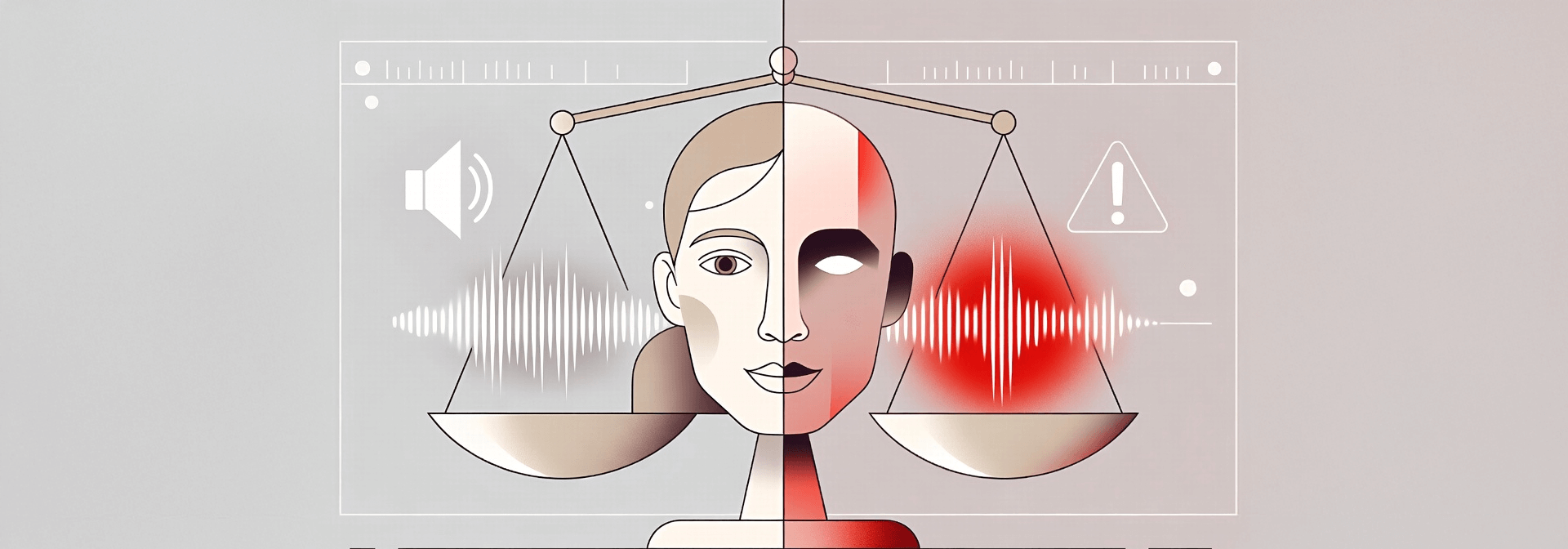
Balancing human identity and synthetic media is now an ethical design problem, not just a technical one.
If your team is considering AI for video projects, adopt a few simple habits that reduce risk and keep the benefits.
First, be clear about what AI is doing in the workflow. Most teams now use some AI-assisted features without thinking twice, like noise reduction, transcription, captions, or colour matching. That is fine. Problems start when AI becomes part of the message rather than the workflow, such as synthetic presenters, voice cloning, or digitally reconstructed testimonials.
Second, audit for bias on purpose, not by accident. Review outputs with people who do not share the same background, accent, or assumptions as the production team. Ask a simple question. Does this portray people fairly, and does it sound like us. If your audience is broad, your review should be broad too.
Third, treat synthetic likeness work as high risk by default. Avoid synthetic faces or voices in business content unless you have explicit, informed consent and a documented approval process. For key moments such as executive messages, testimonials, or anything that could be interpreted as factual, real footage is still the safest path.
If you need to verify suspicious media, a few tools can help as a first pass. Deepware provides an online scanner. Reality Defender offers an account-based option with a free start. DeepFake-o-Meter is an open-access research platform from the University at Buffalo, and it is clear that results should be interpreted with caution.
Use these as triage, not as a final verdict. Detection is improving, but it is not a magic stamp of truth. False positives and false negatives are still common, especially with compressed or heavily edited video.
Ethical guidance only becomes useful when it can survive contact with real production pressure. The ideas above are not abstract principles. They map directly to everyday decisions that producers, marketers, and content teams now have to make.
The table below distils those decisions into a simple working model you can use as a sense-check before anything goes live.
Working model for responsible AI use
| Concept | Benefit | Application |
|---|---|---|
| Consent as infrastructure | Protects identity, reputation, and legal position | Document explicit approval for any synthetic face, voice, or likeness |
| Disclosure as trust protection | Prevents audience confusion and reputational harm | Disclose when AI alters who appears to speak or what appears to happen |
| Bias as production risk | Avoids tone-deaf or exclusionary content | Audit outputs with reviewers from outside the core production team |
| Provenance checks | Reduces the risk of spreading manipulated or stolen media | Verify sources and rights before repurposing third-party clips |
| AI as workflow support | Speeds production without undermining authenticity | Use AI for cleanup, captions, and fixes rather than synthetic presenters |
| Detection as triage | Flags suspicious content without over-reliance | Use detection tools as a first pass, not a final verdict |
When disclosure matters and when it just creates noise
This is the bit most ethical AI guides skip. They say be transparent but never define what that means.
A useful rule is to separate workflow assistance from meaning and identity.
Disclosure is usually not necessary when AI is doing background work that does not change the substance of what the viewer is seeing or hearing. Think subtitles, light noise reduction, or removing a hum.
Disclosure becomes more important when AI changes any of the following:
Who appears to be speaking
What someone appears to have said
What appears to have happened
Whether a person shown is real, present, or consenting
If the viewer could reasonably believe something is authentic when it is not, that is the moment where a simple disclosure protects trust.
Pressure points that catch real teams out
Ethics often collapses under pressure, not because teams are careless, but because real production is full of awkward moments. These scenarios come up a lot.
A marketing team wants a synthetic founder voiceover
If a founder’s voice is being cloned, you are dealing with identity and trust. Treat it as high risk. Get explicit consent in writing, agree where and how it can be used, and build a sign off trail. If you cannot document that, do not ship it. If you’re weighing the trade offs for creatives and brands, AI voiceovers and what they mean for voice actors and businesses is a useful deeper dive.
A client supplies a viral clip and asks you to repurpose it
This is where provenance matters. Before you edit or publish, verify the source, check rights, and sanity-check whether it could be manipulated. If you cannot confirm where it came from, it is safer to walk away than to become the distribution point for misinformation. Industry work on content provenance is moving toward standards such as C2PA, which is designed to help trace origin and edits of media.
A vendor will not explain their AI pipeline
This is a quiet red flag. You do not need trade secrets, but you do need clarity on consent, rights, and ownership. If a supplier cannot describe how they handle likeness and voice consent, or who owns the outputs, treat it as a risk and choose another route.
A quick vendor due diligence check
If you outsource any part of AI-assisted production, ask five questions. The aim is not to interrogate. It is to protect your brand.
What tools are being used in the pipeline
Who owns the outputs, and can they be reused elsewhere
How is consent handled for voice, face, and likeness
What is the approval process and can you evidence it
What happens if a claim is challenged later
A good supplier will answer these without defensiveness. If the answers are vague, that is useful information.
Why authenticity still wins in the long run
On shoots from dusty African trails to sleek London studios, I’ve seen how real, unfiltered moments build lasting connections. Audiences can sense when content feels slightly off, even if they cannot name why. That is why a human-first approach still matters. It sidesteps ethical traps and produces videos people actually watch, share, and remember.
Ethical AI use is not about rejecting tools. It is about using them to remove friction while keeping accountability where it belongs. With the right boundaries, teams can move faster without sacrificing trust.
If you cannot explain how something was made, cannot confirm consent, or cannot justify the change, it probably does not belong in business content. The safest long-term strategy is simple. Use AI to support the workflow, but keep real people, real responsibility, and real approval processes at the centre.