AR Brand Videos in London 2026: Creating interactive on-location experiences
Last updated: Feb 4, 2026
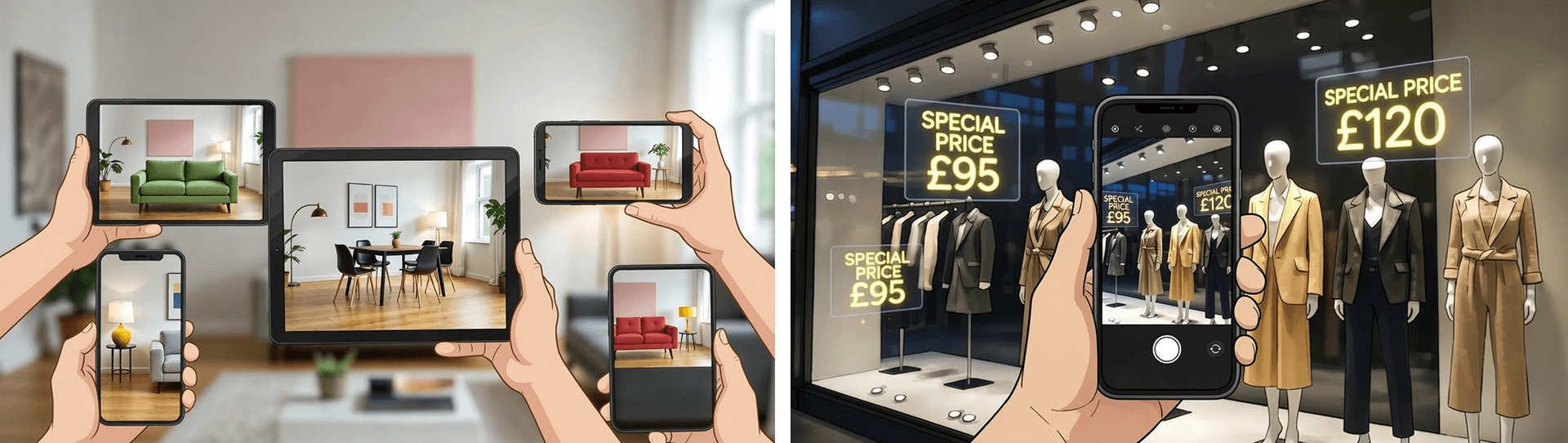
Augmented reality is no longer something that gets bolted onto a campaign at the end. In 2026, audiences are used to formats that respond, reveal, and reward curiosity. They still watch passively when the story carries them, but they also like to explore when the format suits. That mix is part of Where Video Lives Now. AR makes it possible by layering interactive elements over real footage, usually triggered by a phone scan, a link, or an on-screen prompt.
London is a strong setting for this kind of work. It has recognisable locations, plenty of visual texture, and a sense of place that helps the real-world layer feel anchored. Done well, you are not replacing the street with a digital world. You are using the street as evidence.
The key is intention. AR works when interaction adds value for the viewer, not just motion for its own sake. If the interaction does not deepen understanding, help someone decide, or create a clear moment of delight, it quickly turns into friction.
What exactly is an AR video?
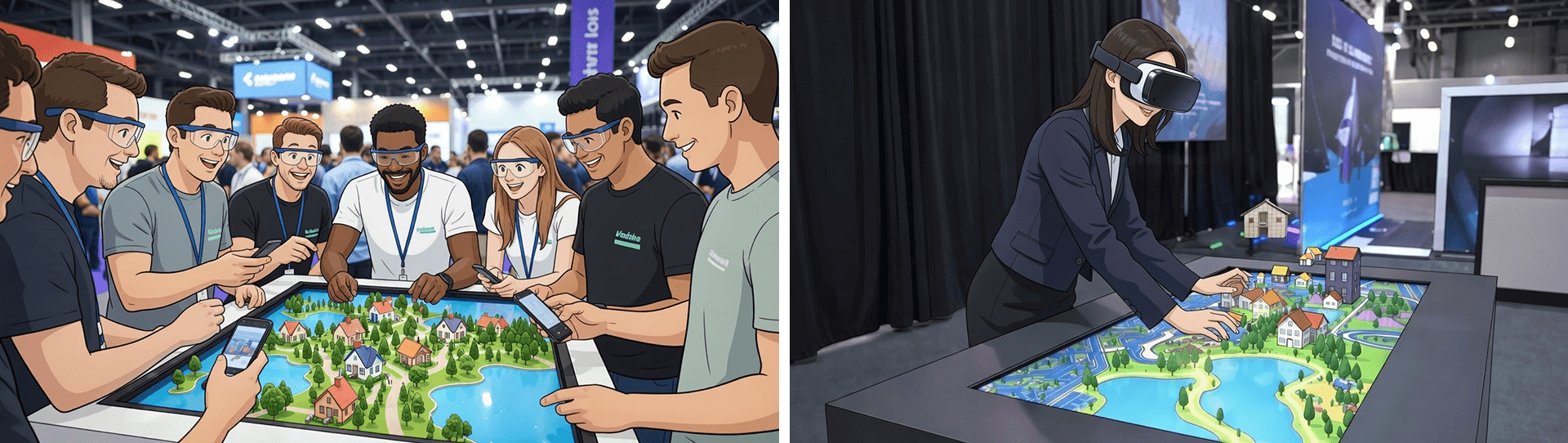
AR works best when the real world does the anchoring, and the digital layer earns its place.
An AR video uses real footage as the base layer, then adds digital elements that viewers can trigger or manipulate in real time. Unlike VR, which places someone inside a fully digital environment, AR keeps the physical world present and adds objects, captions, information, or effects on top.
In practice, that might look like
a product reveal where tapping highlights features or swaps colourways
a location story where scanning unlocks overlays, captions, or historical context
an event film where pointing a phone at a poster or screen unlocks a short interactive layer
a retail experience where an object can be placed into a room view to judge scale and fit
The strongest AR ideas stay simple. One clear interaction. One clear reward. Anything more tends to become confusing on a phone.
When AR is worth it, and when it is not
AR can be brilliant for brand work, but only when it earns its place. It tends to work best when the audience already has a reason to lean in. Product launches, retail promotions, tourism stories, cultural campaigns, and experiential installs are obvious fits.
It is usually less effective when
the story relies on emotional pacing and uninterrupted immersion
the viewer is likely to be watching in a low-attention setting
the interaction does not change the meaning of the piece
the campaign cannot support proper testing and QA
A good test is to ask what AR lets the viewer do that they already want to do. Explore options. Understand a feature. Unlock a hidden layer. Take part in a moment. If the answer is vague, a well-shot film will often perform better.
How to plan an on-location AR shoot in London
On-location AR succeeds in pre-production. The base footage needs to be strong on its own, because the digital layer will be judged against it. Clean composition and stable movement matter more than you might expect, because overlays and tracking fall apart when the underlying image is chaotic.
Plan around a few realities
Choose locations with clear anchor points and consistent textures so overlays sit naturally.
Avoid lighting that changes rapidly. Moving cloud cover and reflective shop fronts can make tracking harder.
Stabilise the camera. Smooth movement is not only aesthetic, it helps the AR layer feel believable.
Capture wide establishing shots as well as mids. AR needs room to breathe.
Frame for a phone screen. A shot that looks beautiful on a large display can become unreadable on a small one.
Test during the shoot. Even rough prototypes reveal whether an idea reads clearly in the real world.
London permissions are the usual mix of location access, borough expectations, and common sense. If you are adding physical markers, stands, or temporary signage to support scanning, treat it as part of the location plan, not a last-minute add-on.
Budget routes that actually make sense
AR production has widened out. You can start small, learn quickly, and scale up only when you have proof it works.
Here are three realistic routes.
| Budget route | Best when | What you build | Notes that matter |
|---|---|---|---|
| Entry level | You want a social-first proof of concept. | Simple effects, try-ons, or prompts using social AR tools and templates. | Keep the interaction minimal. One action, one reveal. Most social AR is tried, not studied. |
| Mid-range | You want WebAR or a more controlled branded layer. | A single interactive layer that supports a clear goal, like product exploration or a location unlock. | Avoid forcing an app download where you can. Budget time for device testing, that is where credibility is won or lost. |
| Higher-end | The AR experience is the campaign, not an add-on. | Bespoke builds with a proper 3D pipeline, stronger tracking, and deeper interaction design. | Plan for maintenance. If assets are hosted and platforms update, someone must own that after launch. |
What to watch in 2026
AR is moving in three directions at once.
Web-based experiences are becoming more common because friction matters. If the activation takes too long to load, people leave.
Real-time AI support is improving production speed, especially for segmentation, asset prep, and iteration. It helps teams move faster, but it does not replace interaction design.
Wearables are progressing, but phones remain the default for most campaigns. Plan for the device people already have, not the one you wish they had.
If you want a quick sense of where consumer AR is heading, this short demo captures the direction of travel without the hype.
Real-world demo of consumer AR glasses, showing the kind of always-on overlay experience brands are beginning to plan for.
The practical trend is simple. The experiences that win are the ones that feel effortless. Clear prompt, fast load, obvious payoff.
A final check before you commit
Before you choose AR, run a quick test on the concept.
What is the one interaction?
What is the reward for doing it?
Would the video still work if the AR layer failed to load?
What will confuse a viewer seeing it for the first time, in a noisy real-world setting?
Are you willing to test across devices, because that is where credibility is won or lost?
If you can answer those cleanly, AR can turn a familiar London location into something people remember, not because it looked expensive, but because it invited them in.
Final Thoughts: Ready to Bring AR to Your Brand Videos?
Augmented reality brings a fresh dimension to on-location brand videos, turning familiar London settings into interactive experiences that viewers remember and share. The possibilities keep growing, especially for campaigns that benefit from direct audience involvement.
Start small, test ideas with your audience, and build from there. The tools and techniques available today make it easier than ever for brands to dip in and create something memorable.
Enjoy exploring AR in your next project.