Synesthesia in Brand Videos: Creating That Unforgettable 'Feel'
We hear it all the time in client briefs. “I want great storytelling.” The phrase gets used as if it guarantees impact. Genuine connection goes deeper than a tidy narrative or striking visuals. It shows up in how viewers physically respond, through memory, tension, and even goosebumps. For the wider framework behind this, sensory storytelling for video is the reference point.
This magic often stems from synesthesia, where senses overlap in the brain. Sound might spark a sense of touch, or colour suggest temperature. When a branded feeling is the goal, audio identity that carries memory can do more work than visuals alone, especially when tone and repetition become part of recognition.
These approaches use everyday tools like audio, rhythm, and grading. They demand no massive budgets, just thoughtful decisions. The result creates content that stands out in busy feeds and builds lasting loyalty.
The Power of Sensory Blending in Storytelling
Have you ever finished watching a promo and felt a strange tingle, almost like touching the item shown? That response rarely happens by chance. Our brains wire senses together naturally. A familiar noise or hue can whisk someone back to a cherished moment, similar to how a song or fragrance triggers nostalgia.
When videos harness this, they forge lasting bonds. These are just a few of many examples that illustrate how brands apply amplified sounds and sensory cues to create immersive, memorable experiences.
Dune: Part Two Official Trailer (2024)
As a cinematic parallel to brand videos, the official trailer for Dune: Part Two (directed by Denis Villeneuve) masterfully uses sensory sound design to evoke physical sensations. Deep, rumbling bass lines simulate the massive scale of sandworms and desert winds, while detailed Foley for footsteps in sand and explosions creates a tactile feeling of immersion and weight. Viewers often report feeling vibrations or "chest thumps" from the audio alone, proving how layered sound can make vast, untouchable environments feel real and visceral, much like the techniques in brand ads.
Michelob Ultra: ASMR Super Bowl Ad with Zoe Kravitz (2019)
Michelob Ultra brought ASMR to the Super Bowl stage with this spot for their Pure Gold organic beer. Zoe Kravitz whispers softly while tapping the bottle, popping the cap, and pouring, using fizzing bubbles and subtle textures to evoke the cool, refreshing sensation of the drink. It created calming tingles for millions, proving sensory audio works even in high-energy advertising.
IKEA: Oddly IKEA ASMR Dorm Room Unpack (2017)
IKEA's "Oddly IKEA" campaign included this extended ASMR video guiding viewers through a dorm room setup. A gentle voice strokes bedding, taps lamps, and rustles fabrics, turning everyday items into a relaxing tactile journey. The satisfying clicks and whispers highlighted product textures, making affordable furniture feel premium and inviting.
These stand-out efforts demonstrate how sensory blending can transform standard product promotion into something viewers physically respond to and remember.
Key Techniques for Evoking Real Sensations
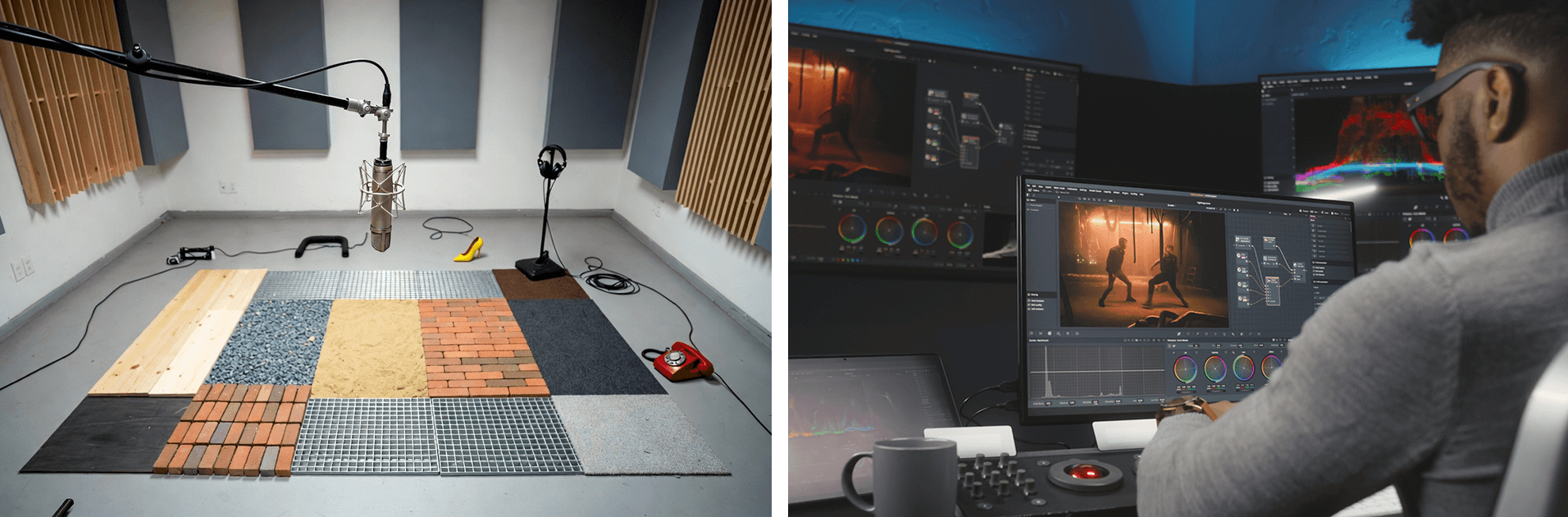
Behind the scenes of sensory filmmaking techniques: a Foley studio capturing tactile sounds from everyday textures (left) and a professional colour grading suite shaping mood and rhythm through editing (right)
Hollywood filmmakers and content creators have mastered these methods to pull audiences deeper into stories. Brands can adapt the same tools for corporate videos, turning standard promotions into felt experiences. Marketers commissioning content, or creating it in-house, gain a real edge by understanding and requesting them.
Sound (Foley): Foley artists in big productions recreate every footstep, door creak, or sword clash to make scenes feel authentic and immersive. Feature films rely on this to evoke weight, texture, and presence without visuals alone. Brands use it in product videos. Sharpen a watch clasp click for premium heft or layer fizz in skincare for smoothness. Prioritise Foley that matches your product's real-world feel.
ASMR-style triggers: These have exploded among creators and influence mainstream work. Close-mic whispers, rustles, or tapping relax viewers and spark tingles. Hollywood adds subtlety in trailers for depth. Brands highlight textures. Soft shifts in fashion reels or emphasised pours in beverage ads work well. Many now dedicate entire productions to this style in longer form ASMR led spots. Keep it subtle. Cues arrive fractions ahead of visuals.
Silence: Cinema directors drop sound after intense moments for tension or emotion. Creators pause for emphasis in shorts. Brands add brief quiet after Foley, like a zipper rasp, to deepen sensation.
Rhythm and pace: Hollywood syncs cuts to scores for energy or intimacy. Creators match beats in montages. Brands use quick edits with upbeat tracks for launches or slower swells for lifestyle calm. Editing psychology still matters here, especially where pacing controls trust and emphasis.
Colour grading: Major films shift tones for warmth or clarity. Creators apply filters for vibe. Brands suggest comfort with warm coffee steam or crispness with cooler tech palettes.
Combining elements: Macro textures with matching audio, low rumbles for warmth, or chimes for freshness let viewers "touch" remotely. Explore these in campaigns for content that feels as good as it looks.
Whether working with external filmmakers or creating videos in-house, raise awareness of these possibilities by asking questions like these.
Can crunch sounds lead food shots?
How might engine notes suggest refinement?
Could specific textures gain emphasis through audio?
Such details shift viewing from passive to immersive.
Applying It Wisely in Your Campaigns
Keep in mind that these sensory techniques have a very specific purpose. They excel when the goal is to evoke emotion, texture, or physical response rather than simply inform or persuade through words alone. Not every piece of content calls for them, and forcing them in can feel contrived or distracting.
Understanding your brief is essential. Ask yourself what the video truly needs to achieve. If authenticity and trust are paramount (as in testimonials, case studies, or podcast-style interviews), keep things raw. Clear voices, genuine expressions, and minimal distraction let the speaker's story stand on its own. Adding layered Foley, ASMR cues, or dramatic silence here risks undermining credibility.
Reserve intense blending for content where experiential impact matters most.
Product unveils
Origin tales
Lifestyle or sensory-focused work (fragrance, food, fashion, cars)
Always enhance, never overwhelm. Treat these techniques like seasoning and test simply by playing audio alone from a cut to see if it stirs a response. If it does, the balance feels right. Nothing succeeds without strong narrative foundations, so sensory cues should act as spice atop a solid arc. Build a meaningful beginning, middle, and end, placing hints strategically with quiet before reveals and swells at peaks. The result becomes gold: content that does not merely play, but resides in hearts long after. Success shows clearest in feedback, when viewers mention goosebumps or sudden desire for the product. These rare yet unmistakable signs of true connection let multi-sensory videos stand apart in scrolling feeds, transforming routine promotions into lasting memories.
Next campaign, chat these concepts with your director. Explore how audio, rhythm, and hues can make messages felt, not only viewed. Outcomes frequently surprise pleasantly.