Can AI Give Filmmakers Real Control? Hollywood's Next Golden Era Will Be Won Pixel by Pixel
Last updated: September 13, 2026
You know that feeling when a film hits you so hard you almost feel the grit on your skin. The set is so realistic. Actors pour out performances heavy with sweat and real emotion. By the time the credits roll, you walk out convinced you’ve just glimpsed a world that actually exists somewhere out there.
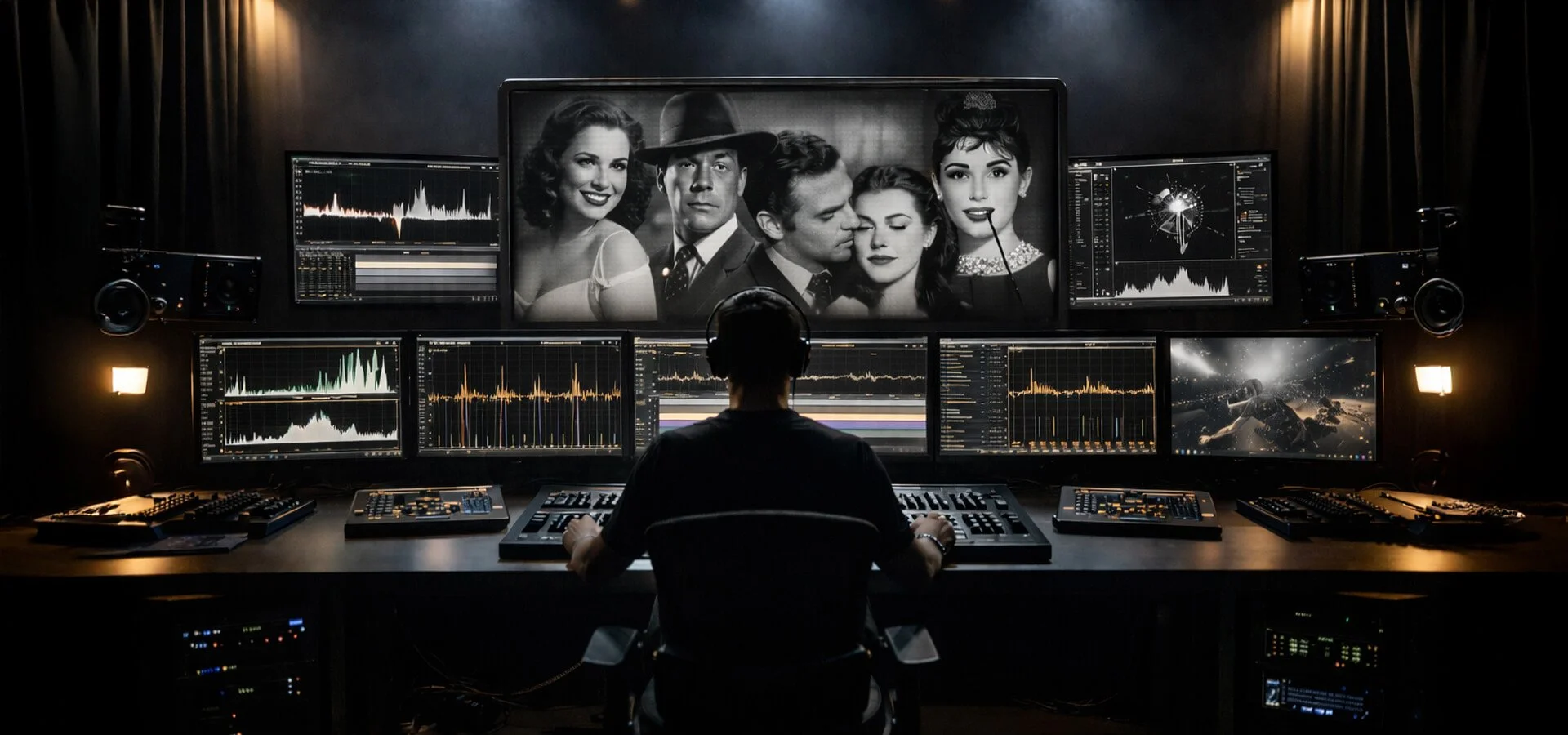
Post-production is where the story can truly take its final shape.
That kind of belief doesn’t come from technology showing off. It comes from craft. From taste. From the quiet patient work of protecting everything that feels human while making the cinematic side sharper than ever.
So can a prompt give a filmmaker real creative control? Not at the level that matters. Text-to-video can suggest a shot. It cannot place the light, hold the glance, or shape the frame pixel by pixel. That control, and the judgement behind it, is where the next golden era gets made.
Is Hollywood over? No, but the hype cycle is real
You see the headlines everywhere right now. People are asking if Hollywood filmmaking is over. AI is going to flood everything with soulless content and that will be the end. The panic is loud and the excitement is just as loud.
Tools can definitely change how images get made. They do not have to replace the reason people still show up in cinemas or on their sofas.
The summer of 2026 made that point louder than any argument could. Christopher Nolan's The Odyssey, a three-hour, R-rated adaptation of a three-thousand-year-old poem, shot entirely on IMAX 70mm film, opened to over $120 million and went on past $1.6 billion, the biggest R-rated film ever made. Spider-Man: Brand New Day passed a billion alongside it, in a summer that ran well ahead of the year before. Neither film was prompted into existence. Somebody was in the driver's seat for every frame. There will be plenty of noise about the tools, and plenty of people shouting about the next big thing. The receipts keep pointing at the same answer. Human-driven filmmaking, at the highest level of craft, is still what people pay to see.
There is a familiar rhythm to all this. Gartner’s Hype Cycle describes how new tech gets hyped to the moon, peaks with massive FOMO, then drops into disappointment when the novelty wears off. Then things drift back toward what actually feels real. You see the same thing in everyday life. Food delivery apps make skipping the kitchen tempting. YouTube is full of overnight success stories that quietly hide years of unseen work. Prompts tap into that same shortcut instinct. Greatness without the grind.
That is why this moment feels like a useful wake-up call. When a story is weak no tool can hide it for long. Faster iteration can actually make the problems more obvious, because the surface gets polished while the heart stays empty. And plenty of people feel the magic has gone missing from a lot of what gets made. Maybe this is the gut check studios need. Strip back the noise. Check what still lands. And start fresh. The real upside is that it can push everyone back to the fundamentals. Stronger scripts. Clearer character moments. Directors who know exactly how a scene needs to feel before anyone touches a single pixel.
Getting better at spotting when AI genuinely improves a scene and when it starts to flatten the human feeling is going to be one of the most valuable skills in the years ahead. One practical way to judge it is to look for the cues that tell you whether something feels genuinely human or subtly artificial, especially when you are making decisions in post.
Can a prompt give you pixel-level control?
Prompt generators and text-to-video tools can be genuinely useful. They help with rough concepts, quick previsualisation and early mood boards. They allow individuals and smaller creative teams to experiment at a speed that used to need an entire team, so anyone with an idea can get moving.
They can be useful for established companies too. Some of these tools can now produce footage strong enough to use in real campaigns, not just as a way to explore options. That does not remove the need for judgement and control, but it can expand what is practical to make and ship.
It is simply opening the door wider so more people can play with ideas. Software built around prompts has its own useful and creative lane. It is just another path into making images and scenes. The destination can still be craft, even if the route looks different.
The catch is that language alone rarely gives you the kind of control you have on a real set. I have spent fifteen years on sets and I make generated work now too, so I feel this gap every week rather than reading about it. Everything still comes down to a human being in the driver's seat. Choosing references. Setting limits. Deciding what actually matters. You are always translating a visual intention into words, and some of the precision gets lost in that translation. The exact way someone shapes light. The precise shadows that fall across an actor's face. Prompts can suggest a direction, but they cannot give you the kind of control you need at the pixel level.
Templates are everywhere. Websites, brochures, apps, and yes, prompt generators. They can get you started fast. But when you need the logo three pixels left, the spacing to breathe, or the whole thing to feel right, that is when you want someone who can crack open the system and shape it properly. That is the advantage of someone who has pixel-level control.
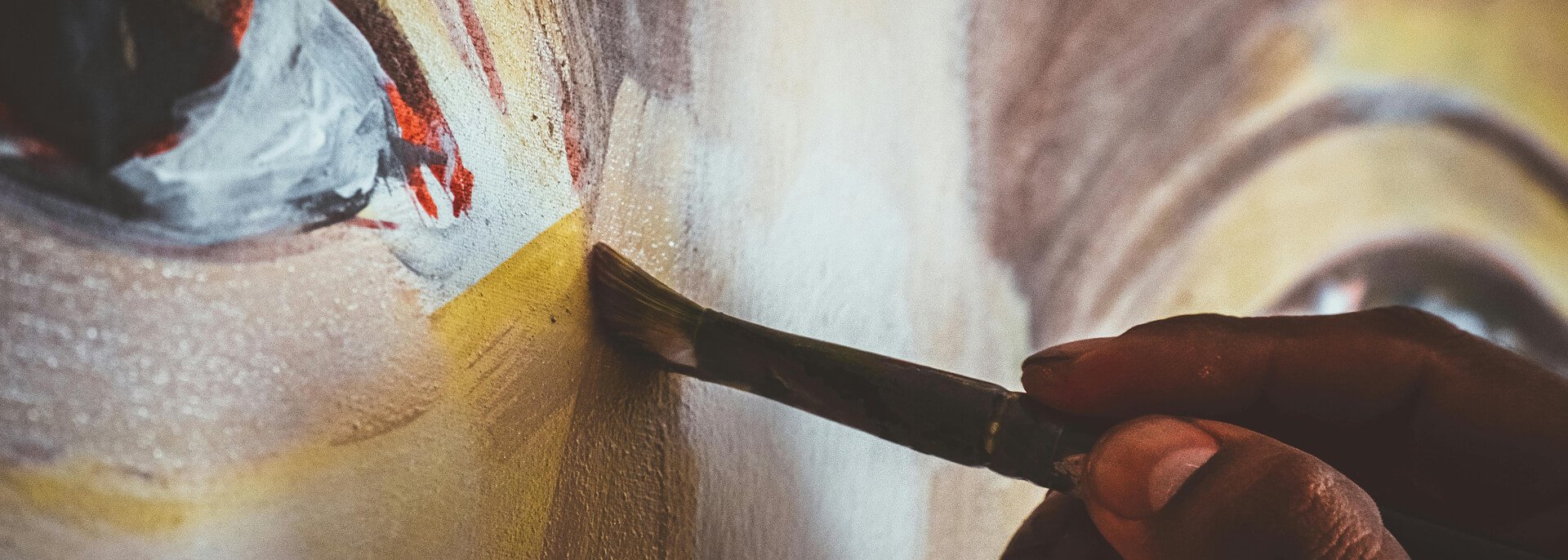
Taste shows up in human, precise choices you can feel, and precision happens one stroke at a time.
This is exactly why the painting analogy hits so hard. Most artists would rather hold the brush than try to describe the painting to someone else. They want to feel the pressure of the brush on the canvas, control each stroke, and stay open to the spontaneous moments where the paint does something beautiful and unexpected. That kind of precision and immediacy comes from direct control, not from describing an outcome in words.
The same is true in filmmaking. Directors and editors want real control over camera positions, angles, and the exact placement of every character in the frame. Some of the most powerful moments can be unrepeatable. A pause. A glance. A line delivered differently than expected. Prompt-led tools can help you explore and iterate, but when you need continuity, precision, and emotion shaped frame by frame, direct human control still does the heavy lifting.
And honestly, this tech is a way to flex the creative muscle. Not everyone can afford a crew or a set. Not everyone can play the piano either, but plenty of people have the music in their head. If AI-assisted software lets them get it out loud, that is a gain, because suddenly the idea is no longer trapped with one person. Great ideas become a lot easier to share.
And here is the thing. It is not Hollywood versus the bedroom. Both exist. Both matter. One builds empires. The other builds worlds. Together they remind us why we ever fell in love with this.
Where AI video and traditional filmmaking actually meet
The most exciting future is not a prompt box that spits out complete movies. It is post-production turning into an even more powerful creative playground while real performances stay anchored in reality. What that does to the editor's job is a separate question, and I have written about it in will AI replace video editors by 2030.
Volumetric capture keeps the performance real and unlocks new camera choices in post. A clear overview of volumetric video capture helps set the context.
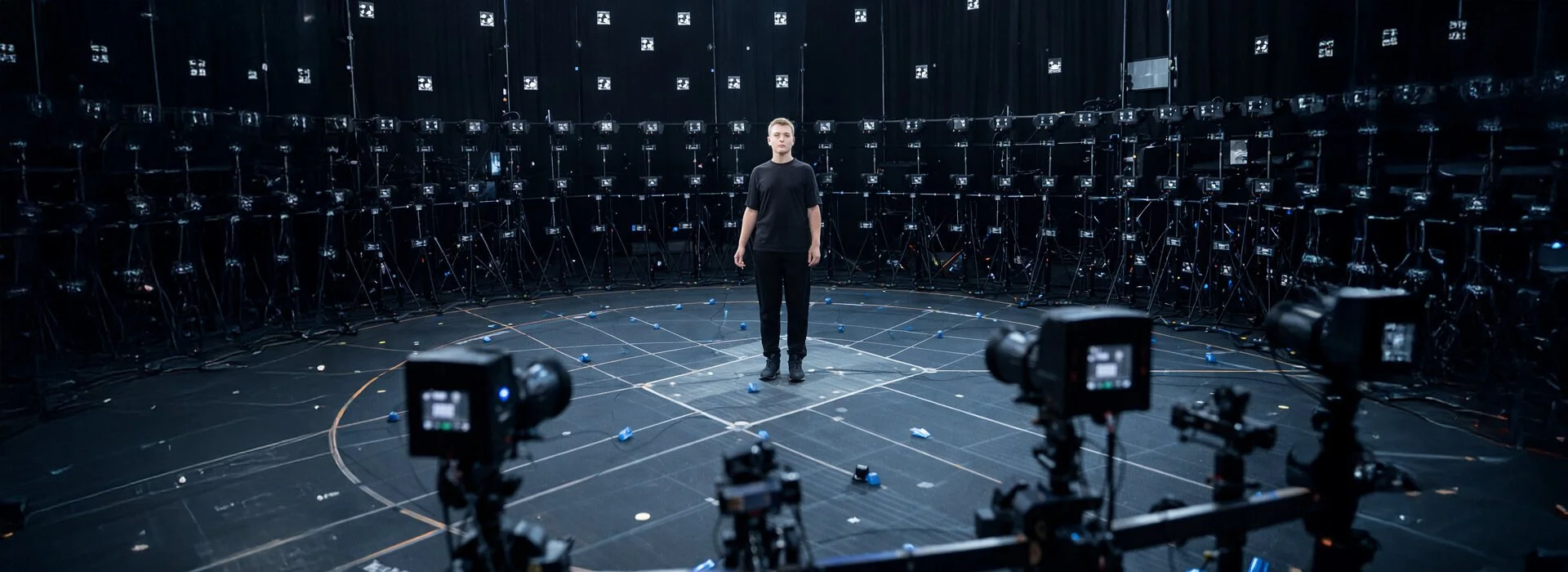
Volumetric capture: keep the performance real, and unlock new camera choices in post. A clear overview of volumetric video capture helps set the context.
More tech could be coming. Better volumetric rigs, smarter lighting tools, AI that listens to your voice instead of guessing. It could hand filmmakers sharper control, more freedom, less guesswork. And it may get even more hands on. In the future, VR headsets could let directors and editors step inside captured scenes, walk the space, and experiment with shot placement like they are moving a camera through a real room. Not to rewrite a performance, but to organise coverage, adjust framing, and shape attention at a pixel level. That kind of control could make post feel less like a desk job and more like a creative space you can physically visit. But none of it matters if we forget why we are doing it. The pixels are tools. Those tiny, beautiful grains of sand are the building blocks of filmmaking.
The risk is still there of course. If the tools make it too easy to smooth away texture you can accidentally flatten the very things that make a scene feel alive. Think about painting on a real canvas. An artist can feel the exact pressure of the brush. They notice the tiny tremor in the wrist that adds unexpected life. AI can copy the look of brush strokes. It cannot feel what your hand feels in that moment. A thoughtful hybrid pipeline can protect the human detail that makes a scene feel real.
What should Hollywood do with AI? Reinvest in the crew
Actors are right to speak up about concerns around likeness, voice and how a performance might be changed after filming. Those worries deserve clear rules, real consent and firm boundaries. It is why I put my own rules in writing, in the AI policy I hold every production to, so the people in my films know exactly what I will and will not do with their face and voice
But the loudest debates can miss the people who keep productions running. The full crews. Camera operators, grips, electricians, costume and make-up teams, runners, post assistants, supervisors, catering, and everyone else whose names fill the credits. Anyone who has ever watched film credits knows the list never ends. There is a quiet energy behind it all too.
Filmmaking is family. It is the quiet energy behind the scenes. The ones who haul gear through snow at 3 a.m., share a coat with a freezing PA, and remember your coffee when nobody has spoken in hours. That pulse is what keeps the machine alive, even when the camera is off.
So while AI gets debated, this should also be a moment to back the wider ecosystem. Voice-over artists, VFX artists, sound designers, animators, colourists. Give them better tools and time to learn them. If it is planned well, more people can still play a part, even as the workflow changes.
A new golden era does not have to come from replacing any of that. It can come from investing in it. Reinvestment means putting serious money into the pipeline that protects storytelling. Hollywood still has an edge because it can bring together teams, time and taste at scale. Treat AI like infrastructure, not a shortcut, and you can build bigger worlds while keeping editorial judgement firmly in charge.
Here is the contrast that matters. Indie creators can already make something convincing for the price of lunch. Now imagine what happens when studios push the same direction with real budgets. Fifty million. A hundred million. One hundred and fifty million. Not shortcuts. Not replacing crews. Just bigger, sharper, more impossible stories built on the same human spine. Because the best stuff never needed tech to matter. It needed truth. That is what every storyteller can chase. The feeling you leave behind. The echo that follows people out of the cinema. That is the legacy. That is why we keep going.
Hollywood's Next Chapter
Hollywood if you are listening level up. All the noise about AI taking over? People have not seen anything yet. If bedroom creators can already spit out believable worlds with just a handful of prompts imagine what a fully backed creative industry can do with big massive budgets. Not low quality AI. Not shortcuts. Just bigger sharper more impossible stories still built on sweat real actors and editors who know how to make every single pixel count.
Then, once the dust settles, we can actually put together a future-proof plan. One that makes sure the best content, the stuff that actually moves people, gets rewarded. Not just the fastest or the cheapest. Not the one with the most viral clips. The one that still feels like it was made by someone who cared.
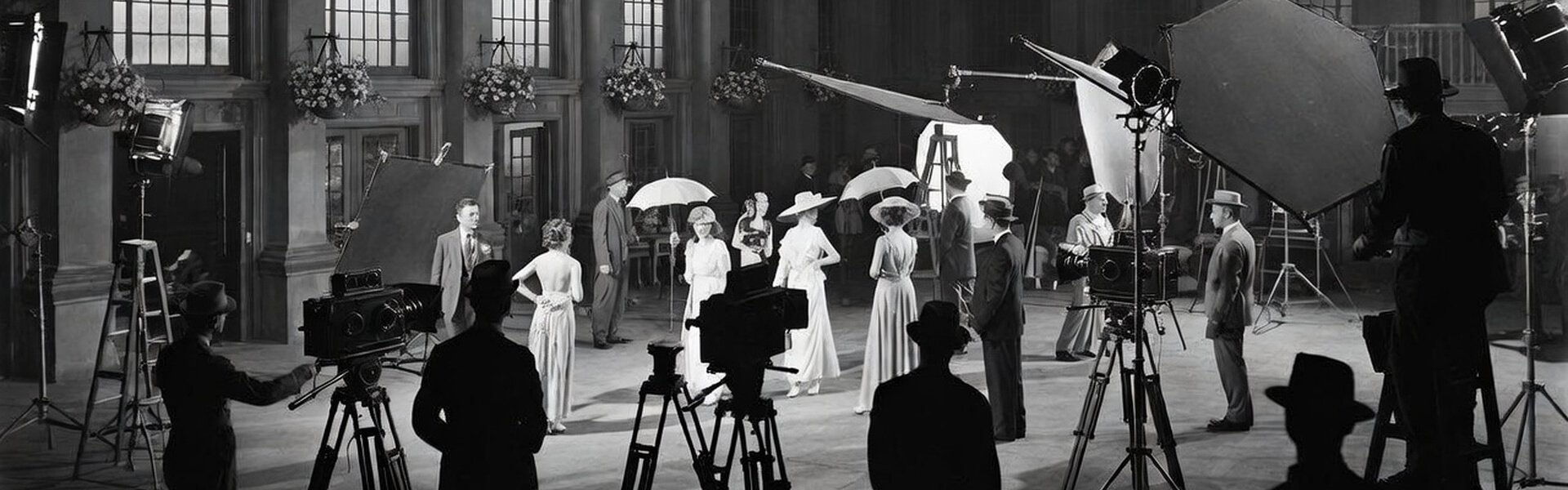
Because honestly the industry has survived worse. Before CGI, before digital cameras, before even colour film, the only thing that mattered was the human spirit. Pure acting. True storytelling. No tricks. No tools. Just people on a stage or in front of a lens pouring everything into a moment. And somehow that still gave you Casablanca, Citizen Kane, The Godfather. Memorable work that lasted.
Films made entirely without any AI assistance can and should have a bright future. Ultimately the method that gives true pixel-level control will win. If you can do that with nothing but grit and heart, imagine what happens when you embrace a hybrid model where tech actually helps instead of hides.
That is the plan. Reward the heart. Let the tools lift it. And watch the whole thing get better.
Everyone’s waiting for Hollywood’s next golden era.
The next move is yours.